Indonesia is driven by trauma in each policy. Sometimes, the trauma itself is not clear, clouded by propaganda that shadows the reality of a historical event. For example, Indonesia is so obsessed with democracy and the freedom to choose its own leader and might avoid the chance of getting ‘ The Good Dictator ‘. Therefore, Indonesia has elections at almost every level. Nonetheless, the urgent issue that Indonesia now faces is not how free they can elect their leaders. The more urgent issue to address is that Indonesia has never achieved stability or realised its economic potential.
After Soeharto’s resignation in 1998, people moved to limit presidential tenure to avoid a new Soeharto. It was actually a simplification of what actually happened during the New Order. Soeharto was not the only actor who ruled Indonesia. He was the face, but not the absolute power that controlled Indonesia for so long. There was a thing called the triangle of power in Indonesia: the Army, the Golkar (Soeharto’s ‘political platform’) and Civil Servants. Soeharto was the public presentation of the power. When one power finally shifted, it was not long before Soeharto’s regime ended.
It was acceptable that Soeharto might not have the best reputation, but it was not entirely Soeharto’s mistakes. Accusing a strong leader who led Indonesia for a long time of being the new Soeharto, without acknowledging that we might need a strong leader for the long term, is a missed opportunity. People need to know that our freedom to elect leaders would not work if the lack of clear focus, quinquennial changes and questionable new leaders every election still occur. We will not find the peace and stability we need to know how to move or which opportunities to tap into.
The Good Dictator: An Irony
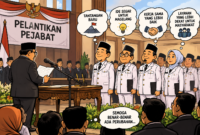
I believe most people in Indonesia seeking new leadership were not entirely happy with the current developments. Some might think that they have been deceived. Based on the survey before the 2024 election, most people were still in favour of Jokowi’s third term. Nonetheless, our laws have prohibited Jokowi from running for his third term. There are people who simply choose someone who says he will continue Jokowi’s legacy, since the other two candidates seem to bring new priorities and ideas that are eventually unfavourable to some, as people simply do not want change.
However, it is fair to say that the current priority has changed dramatically, though people vote for ‘the successor’ without considering his personal history just to get stability and certainty. ‘The successor’ does not seem to understand that most people vote for him for certainty and stability, not a new surprise.
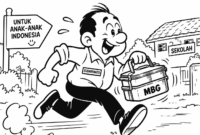
There are programs that are unproductive because there is no clear economic return after they run. It is true that Jokowi’s programs were not perfect, but at least the new toll roads and other new infrastructures are more promising than the free meal program, for example. People are not opposed to providing meals for those in need. People are actually against the idea that the free meal program has diverted funds from other vital programs that could help address issues in education and teachers’ livelihoods. The fact that the program has hurt us financially and damaged our reputation abroad has triggered people’s anger. The recent corruption accusation does not help people regain their trust, which has been eroded by the loss of hope.
I believe that there are people who will think pragmatically that life would be easier, or at least less surprising, if Jokowi continues his third term. People do not have a strong expectation except that there is no more surprise, since we need stability and certainty. However, since we are traumatised by the past, we are doomed to repeat history.
In fact, what happened today (as Tempo reported, only 20% of the previous election might vote ‘the successor’) just shows that limiting the president’s tenure is not working for achieving stability and certainty. People are not happy because they do not care about the free meal program or any political promises from the successor, since they expect nothing to change. Yet, the successor somehow comes with his idea, believing that people voted for him for change. Vice versa, people only expect less surprise. Nothing more.
It is not the first and the last time the trauma-driven laws will affect our stability. There are examples of leaders who stay in power for so long that the stability helps the country. We avoid that possibility only because we have trauma. We actually need to analyse the situation more logically. It does not mean that if Jokowi continues his leadership, we will have a better situation than now. Yet, at least, minimum elements of surprise and policy shifts will help more businesses to survive.