
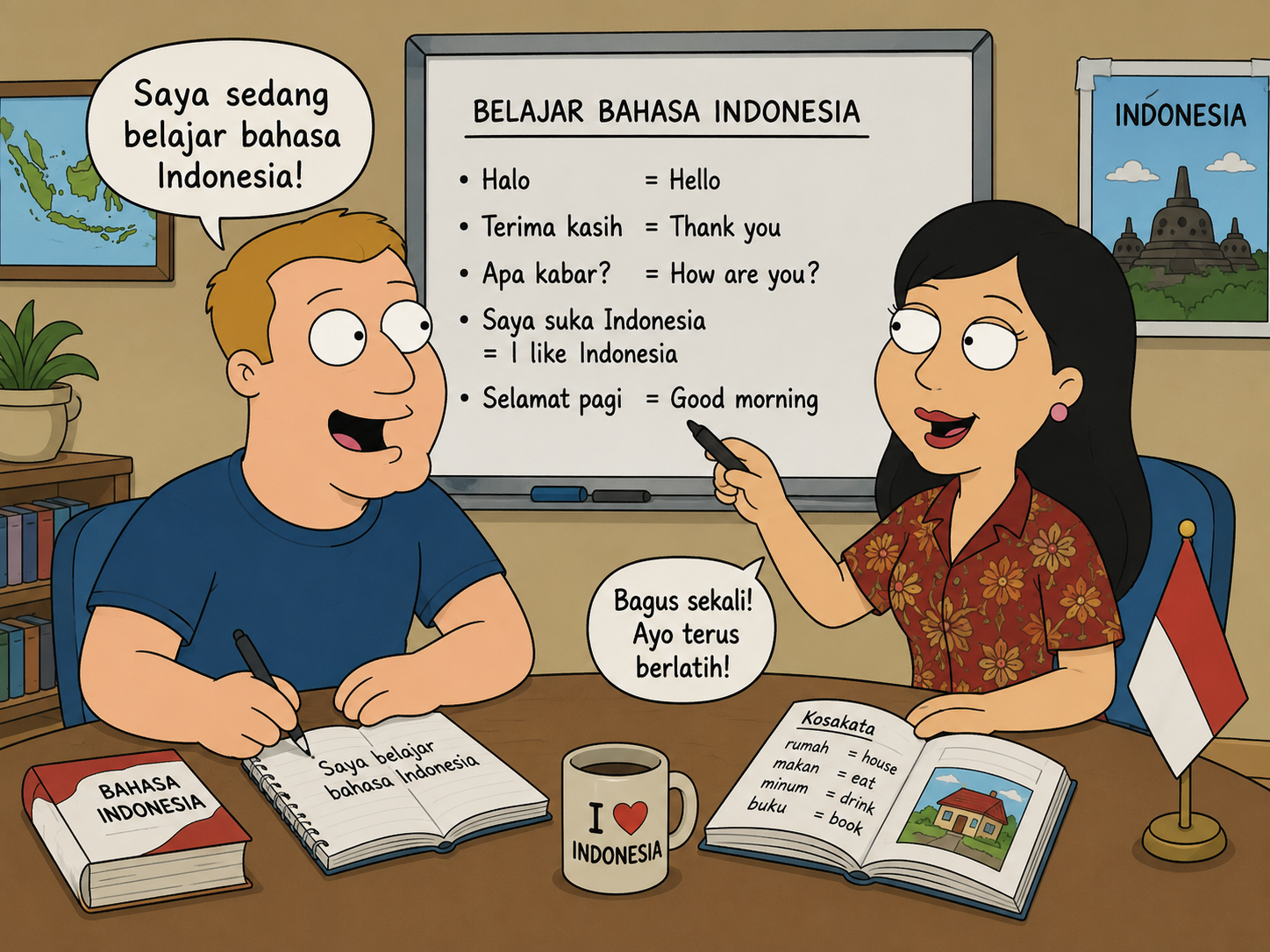
When you learn Bahasa Indonesia, ‘Apa Kabar’ must be one of the first words that you learn. You think it will work like ‘How are you’ in English. It does ring true. In English, the literal translation of ‘Apa Kabar’ is ” How are you? People think that the word ‘Apa Kabar’ will be the first word that you will use often. Nonetheless, you will never feel more wrong than this, since in the real situation, almost no one says ‘Apa Kabar’ naturally or even officially.
Religious Neutrality in ‘Apa Kabar’
People rarely mention this, but Indonesia is a very religious country. I would use the term “a religious country” since this is a unique aspect of Indonesia. You can call Thailand a Buddhist Country or Malaysia an Islamic Country, but to label Indonesia as an Islamic Country is quite debatable. Indonesia is religious, but the majority does not impact Indonesian customs that heavily. It means that on one side, people believe Indonesia is a religious country, but it has never been admitted on the surface.
First, it is true that 80 per cent of Indonesians are Muslims. Yet, not all of them are actually Muslims. Some of them are actually ‘Penghayat Kepercayaan’, which is part of the local religion. In Java, we know Kejawen, and in West Java, there is Sunda Wiwitan. These groups usually register themselves as Muslims since it is easier for them, considering everybody should register themselves as belonging to one of the six official religions in Indonesia. This situation has triggered confusion, Indonesia has made a visionary step to include ‘Penghayat Kepercayaan’ into one group as ‘the other faiths’. So ‘the others’ faith’ is introduced as one of the official religions. Yet, the process until ‘the other faith’ has its clear position will take some time. Therefore, though ‘Assalamualaikum’ is a common way to greet someone, it does not mean that everyone will readily admit it. So the ‘official’ , religious natural term such as ‘Apa Kabar’ is being introduced, though somehow people do not say it in their daily conversation.
Second, in fact, though Christians and Buddhist are minorities, their total population is still significant to be called less influential. Their quantity is enough to build their own customs, the way they speak to each other, including their version of ‘Apa Kabar’ or greetings. In their own community, Catholic will greet ‘Berkah Dalem’ and Buddhist—not all of them to be clear—love to say ‘Namaste’,’Om Swasti Astu’ or the longer version ‘Semoga Semua Mahluk Berbahagia’. Thus, it is clear that there is no single way to say ‘hello’ or ‘how are you’ in Bahasa.
Indonesians will only say ‘Apa Kabar’ to someone they know is a foreigner. They would not say ‘Apa Kabar’ to other Indonesians, even in an official forum. The usual greetings are based on their communities, such as ‘Assalamualaikum’ in the Islamic community and ‘Berkah Dalem’ in the Christian community (though several also use ‘Shalom’). Therefore, the word ‘Apa Kabar’ is not a natural way to greet someone.
Then, why is the word ‘Apa Kabar’ still introduced to the students in most Bahasa Indonesia classes? The answer might be the neutrality of ‘Apa Kabar’ itself; it does not belong to any religion, and it will not make people have misconceptions about Indonesians’ reality of religiosity. It is understandable that a teacher wants to present Indonesia as positively as possible without making their students mistakenly think that Indonesia is a divided country.
Again, as I mentioned before, Indonesia is a very religious country in their way, which makes Indonesia’s situation unique. Christians internalise Christianity in their way, simultaneously other religions too. Greetings become their identity, and rarely is a neutral word like ‘apa kabar’ used except for foreigners.
What if People meet in the Official Forum, And They Can’t say ‘Apa Kabar’?
Interestingly, since the majority of Indonesians are Muslims, people just accept that ‘assalamualaikum’ will be used in the official forum with the government. However, nowadays, it is pretty common that the four official religions’ greetings are used. Therefore, the complete greetings will be ‘Assalamualaikum, Shalom, Berkah Dalem, Om Swasti Astu, Namo Budaya Salam Kebajikan’. However, it is only common for the region that has been well known as the centre of moderate Indonesians or Parties/figures with the patronage of the Nationalist Democratic.
So, as people who have just learned ‘Bahasa Indonesia’, you might be surprised that ‘apa kabar’ does not sound natural or show your fluency, which is ironic. Yet, you can still use ‘apa kabar’ in your daily life in Indonesia, though people will notice that you have not lived in Indonesia for that long, and they would love to help you to learn common greetings in a community by giving examples.