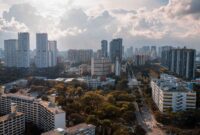

I believe my hometown was a different place when I was a kid, especially when the industry in Magelang was still establishing and growing. I felt like everyone had a job that could meet their needs. It was a good time. As a kid, people had hobbies and choices. Near the corner of my neighbourhood, I often watched people in the evening looking at different kinds of tropical fish.
They were doing their hobby, an expensive hobby, actually: designing aquascapes and getting competitive about how expensive their fish were or how rare their plants were, too. They did it because they could. Meanwhile, not far away, we had a billiard club. Whenever they had free time, they played and laughed together. At that time, they were enjoying each other’s company. Work wasn’t robbing them of their lives. Yet the best time had passed; people started changing their lifestyle.
Fragile Life in The Industry in Magelang
I didn’t study economics deeply when I was young, yet the more I learn, the more I realise how important industry is. Industry in a place can change a city’s course. We cannot expect small and medium enterprises to have real influence. At best, they can provide five job opportunities. Yet, when I was a kid, a paper mill was always running, and they were constantly looking for workers. The pay wasn’t bad; people could be breadwinners.
The industry was getting into its golden age at the right time. They earned income from various parts of Indonesia and even abroad; that money was the economy’s oil, helping it run and making other industries grow, especially the smaller ones. As a result, it catalysed the growth of other industries.
The irony was that when the system disappeared, especially when the paper mill faced bankruptcy, other industries collapsed. That showed how fragile society was when one industry, the economic pillar, failed.
The Irony of the Industry Especially in Magelang
We rarely talk deeply about industry’s role in a small city like Magelang. People were afraid because it was sensitive and sometimes frustrating, with no exit strategy or real, implementable solution.
We need more industries, but we should also be selective, because industries that don’t match the region’s situation, or that could be problematic, can have negative impacts. Socially, it is sensitive, and leaders would opt to leave and talk about something that gives people more hope, like small and medium enterprises.
The irony is that the more we tried to look beyond industrialisation in a regional area such as Magelang, the more we let the ticking bomb explode, causing even greater harm in the end.
When it happened, no one would be happy.
Tourism Could Not Change The Industry by Default
Some people said the direction shifted to the tourism industry. Yet, the industry itself is rarely stable for many reasons. First, it is seasonal; I remember well that when the season was promising, we could be optimistic. Yet, even the best season could not always cover a year’s needs. Often, people were left desperate since the tourists were not as consumptive as they expected.
People now look for experiences, while people in the past still felt emotionally or mentally obligated to buy gifts or other things. In short, the tourism industry would be a good indicator of the people’s economic system. It is always potential but will never be the first choice.
Sometimes I feel nostalgic about what good times might bring. Yet, I realised the past has moved on. The time when people were enjoying life has passed. People are no longer chatting in the evening as they used to be; maybe they are missing the time when they were able to do a lot of things. Now they hustle to survive until they find the right moment.