
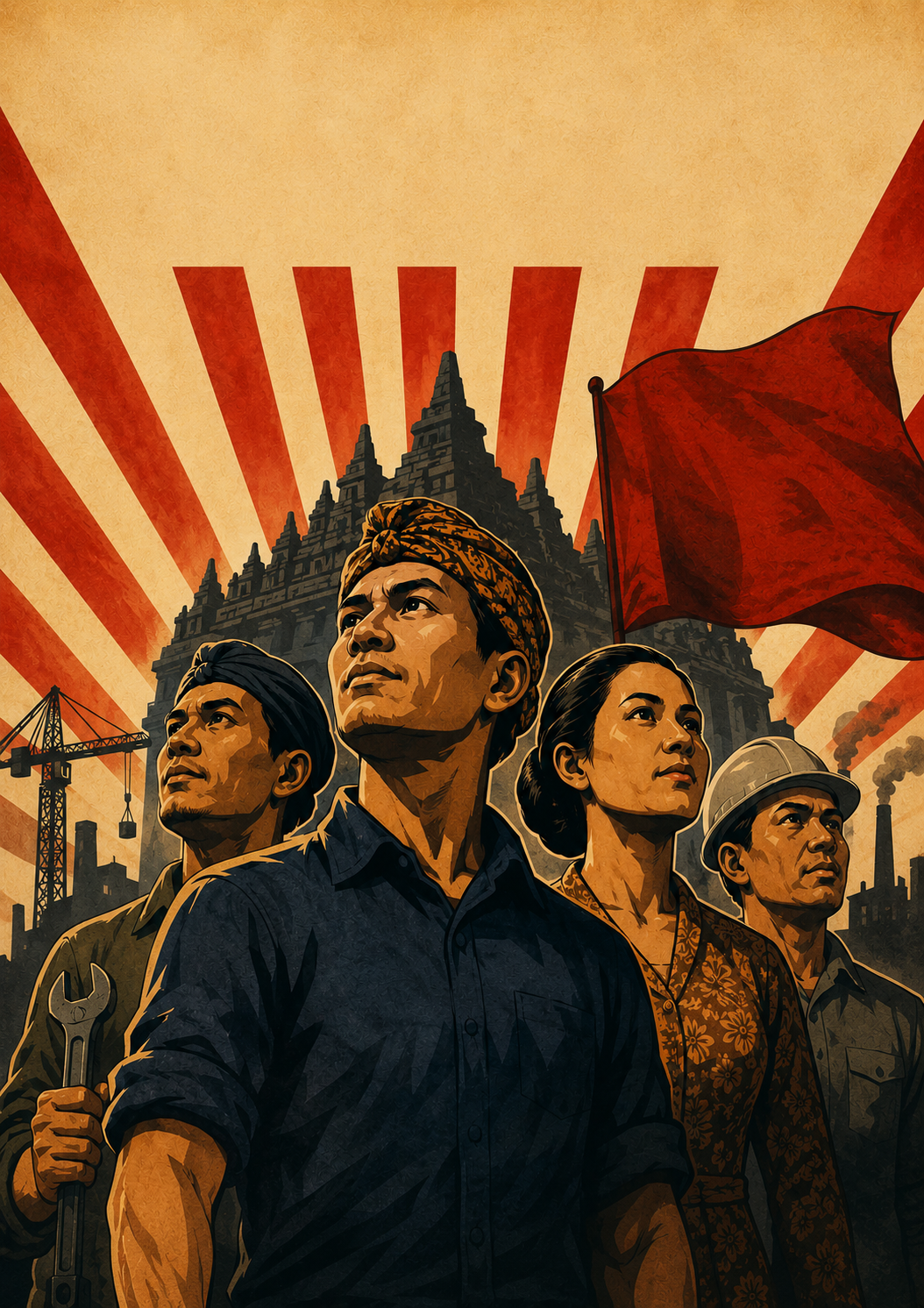
Indonesia has worked hard to promote vocational schools, especially to generate resilient workers. This situation has happened because the government believes that vocational schools will provide us with more opportunities to develop skilled workers who can fulfil positions in our industrial development. In fact, vocational schools have positively impacted the preparation of workers for their future careers in terms of skills. Nevertheless, when we discuss the other sides of workers’ capabilities. Many workers are not mentally equipped to handle pressure. They often break down when the mentality matters most. Thus, it raises the question of whether it is possible to shift workers’ mentality so they can adapt to industrial needs. This is when the question of whether Resilience can be taught in vocational schools is raised.
Based on the definition, Reivich & Shatté noted that people commonly face trauma and hardship in life. The difference is how people react in such an event that generates trauma and hardship in their lives (Rahmat et al.). Resilience is also often associated with motivation. There are questions that circulate around the differences between Indonesian workers and other third-world workers, such as those in Vietnam or Nepal. There is a common assumption that workers from Vietnam or Nepal are more Resilient and perform better than Indonesian ones. Though there is no clear data to back up this assumption, in reality, heavy investments in the region, particularly in Southeast Asia, have not ended up in Indonesia. Therefore, coming to the next question, why?
The Culture of Resilient Workers Cannot Be Easily Taught in Vocational Schools
Cultural influence and how we see the conflict can make a huge difference (Bernuzzi, Sommovigo, and Setti 2022). If someone has a negative perspective on work conflicts, they tend to have a low level of Resilience. This situation occurs because they see that the situation is not normal and that they do not deserve it. Vice versa, if they see work conflicts as a normal situation, they tend to have stronger Resilience and remain productive. They will not resign even though they are not in the ideal situation.
The political system itself or choices will simultaneously impact people’s Resilience, as mentioned in game theory (Leyton-Brown and Shoham 2022). People would act as if they had options or not. When they have a better choice, they tend not to appreciate the other options available. Let’s use Indonesia and Vietnam as an illustration. In a democratic country, workers feel they have choices, and the government will put pressure, with the primary consideration being the election. There is always a choice to leave everything, and they still survive.
Meanwhile, in a less democratic country, having a livelihood is considered the only option, since the government is pragmatic and treats people as a whole community rather than individuals. The even no option situation has happened towards the illegal migrant workers since having a job is a luxury itself. Therefore, the resilience level will be much different.
By understanding this situation, we can conclude that Resilience is not something you can teach in school automatically. Education can make people understand, but practising is a whole different game. The vocational schools have been working hard to introduce the concept of Resilience, but students might only end up understanding it theoretically.
Making the Bridge to teach Resilient Workers
Though the reality is not always as hopeful as people expect, the idea of introducing the way of teaching Resilience in a different way has been proposed. For example, Resilience is introduced through the cultural norms that have roots in Indonesia.
For example, in ‘Masyarakat Jawa’ (Javanese people in Indonesia who come from Javanese Tribes), there are values related to Resilience. In Jogja, there is a quote named ‘Nrimo ing Pandum’, which means to always feel gratitude for whatever you have. These values are related to Resilience. Therefore, Resilience can be taught in this way(Hailitik, Wijono, and Hunga 2023). Local wisdom, if channelled precisely, would motivate students to get closer to the concept of Resilience. This method might not be the best way to teach Resilience, but it does sound better than going on with nothing.
Notes :
Life Interface: A Systematic Review.” Work 73 (4): 1147–65. https://doi.org/https://doi.org/10.3233/WOR-205023.
Hailitik, Welhelmina Maria Yuniaputri, Sutarto Wijono, and Arianti Ina Restiani Hunga. 2023. “Local Wisdom in the Resilience of Batik Artisans Based on the” Putting-Out System”: From the Perspective of Reivich and Shatte Theory.” Int. j. Adv. Multidisc. Res. Stud 3 (5): 138–43.
Leyton-Brown, Kevin, and Yoav Shoham. 2022. Essentials of Game Theory: A Concise Multidisciplinary Introduction. Springer Nature.