
The problem of unemployment is that we thought it was somebody else’s responsibility when it is actually a communal one. Recent trends in job fairs address only one issue: enabling employees to find employers and vice versa. Actually, unemployment is not a matter of lack of access; there are various factors involved.
Access is one issue; the matching issue is a bigger issue. As I mentioned in my article, I believe the purpose of the economy depends on the country’s reality. A developed country can begin to shift its focus toward creativity, innovation, and human rights. Yet luxury is not working for developing countries. Developing countries are in the same pool as other third-world countries that are practically burning candles at both ends. They face rising unemployment while needing to compete with other countries on market value. It does not work for a country to work on two priorities. They should choose one and can invite overseas industries to get involved, but, rightfully, they need to prepare their people for the needs of those industries. Therefore, education should prepare people for industry.
China is a good example. The educational system is designed to serve the industry at first. Yet, once it has maintained its economic growth, China starts to talk about innovation and developing its own industries. When the time is right, innovation is unstoppable, and obstacles can be overcome.
The Job Fair Should be The End of The Channel, but It is More Like a Celebration
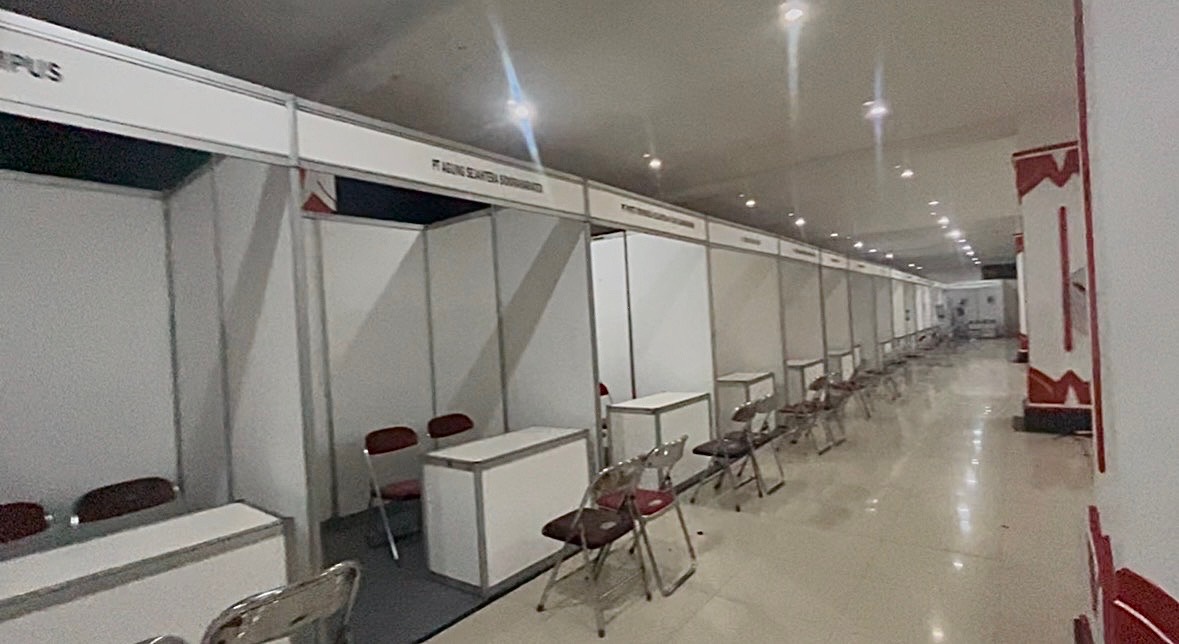
The job fair is supposed to be the end of the channel, yet it is closer to a celebration, a mere evidence that the government cares about the high unemployment rate. As mentioned in the previous article, the talent pool for the job fair is too broad and too hard to predict for both candidates and employers. Employers always come in with a clear idea, or at least a solid one, of what kind of candidates they are looking for. Yet, the job fair usually brings random candidates with very variative profiles, which actually makes the recruitment process harder.
Some companies used the job fair they attended to expand their talent pool. Yet in reality, they will give the talent pool from the job fair the lowest priority. They would prefer the school with which they have a partnership, the same school that has sufficient knowledge of the kind of candidates a company wants, or they might go with internal recruitment, which makes things much easier since it is easier to trace the background or gain enough information to not get toxic workers.
From this situation, we learn that the key to reducing unemployment rates is to coordinate and kill the ego that has shadowed many third-world countries. People who pay attention to social media or read news will always think that they want to play a big role. Yet sometimes we need people who are willing to make sacrifices and play their role as team members.
Industries need someone who is reliable and stable; they have a set of skills that a company needs and can therefore be productive as a team. If a country can provide reliable workers, the job fair might be efficient—or, ironically, it might no longer be needed, since the channel for distributing candidates to certain industries works well.
Coordination Over A Temporary Program
Poverty that comes from unemployment often comes from a lack of coordination or integrated programs. In fact, unemployment is a complex issue; less education means limited opportunities, and restrictive laws also slow overseas investment. The government should work together as one unit to at least (1) ensure the candidates are fit with industrial demands and (2) ensure that the laws are favourable for industries and that there are various incentives for investors.