
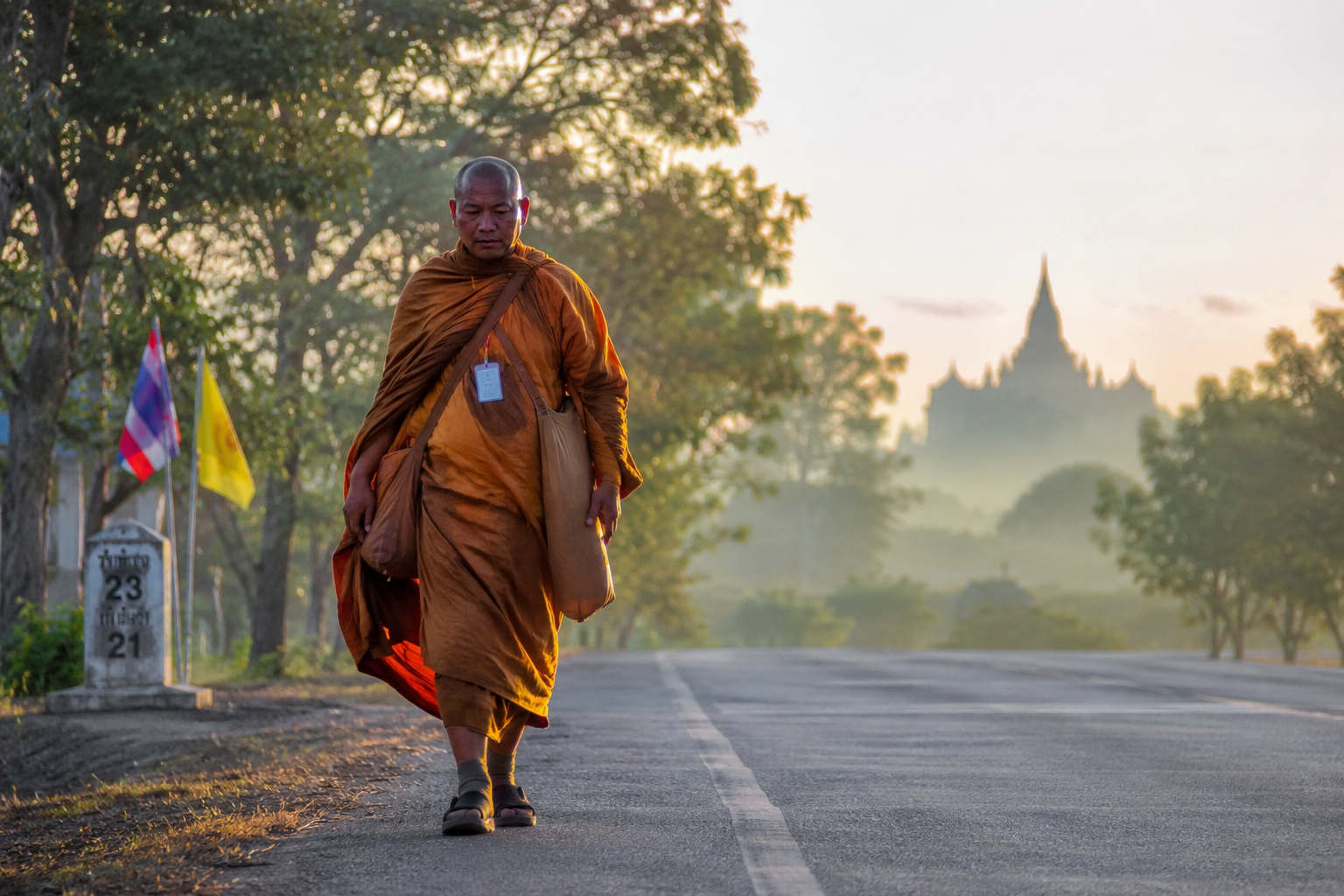
A Thudong monk is a Buddhist monk who practices a spiritual journey known as Thudong or Dhutanga, an ascetic tradition in Buddhism that emphasizes simplicity, self-discipline, meditation, and detachment from worldly comforts. The practice is especially common in the Theravada Buddhist tradition found in countries such as Thailand, Myanmar, Laos, and Sri Lanka.
In recent years, Thudong monks have gained international attention because of their long-distance walking pilgrimages, including journeys from Thailand to Indonesia to celebrate the Vesak festival at Borobudur Temple.
The Meaning of Thudong
The word “Thudong” comes from the Pali term Dhutanga, which refers to a set of voluntary ascetic practices followed by Buddhist monks to train the mind and body. These practices aim to strengthen spiritual discipline and reduce attachment to material possessions.
Typical Thudong practices include:
- Walking long distances on foot
- Carrying only basic necessities
- Sleeping in simple places such as forests or temples
- Eating modest meals received from donations
- Practicing meditation and mindfulness daily
According to Buddhist teachings, these practices help monks cultivate humility, patience, endurance, and inner peace.
Spiritual Purpose of the Journey
For Thudong monks, the journey is not tourism or physical adventure. It is considered a form of spiritual training designed to deepen understanding of Buddhist teachings.
The main goals of Thudong practice are:
- Strengthening self-control and discipline
- Reducing attachment to comfort and luxury
- Developing mindfulness and meditation
- Practicing compassion and peaceful living
- Following the traditional lifestyle of the Buddha and early monks
During the journey, monks usually maintain strict ethical rules, avoid entertainment and luxury, and dedicate much of their time to meditation and reflection.
Thudong Tradition in Indonesia
The Thudong tradition became widely known in Indonesia when groups of monks from Thailand began walking thousands of kilometers to attend Vesak celebrations at Borobudur Temple.
Their pilgrimage often passes through Thailand, Malaysia, Singapore, and Indonesia before reaching Central Java. The journey can cover more than 2,500 kilometers and take several months to complete. Along the way, local communities often provide food, water, medical assistance, and places to rest.
The pilgrimage has also become a symbol of interfaith harmony in Indonesia, as people from different religious backgrounds frequently welcome and support the monks during their travels.
Difference Between Monk, Bhikkhu, and Bhante
Several terms are commonly associated with Buddhist monks:
- Monk / Bhikkhu: A fully ordained Buddhist monk
- Bhikkhuni: A fully ordained Buddhist nun
- Bhante: A respectful title used when addressing a monk
These terms may vary depending on language and Buddhist tradition, but they generally refer to Buddhist religious practitioners.
Conclusion
Thudong monks are Buddhist monks who undertake spiritual pilgrimages and ascetic practices to develop discipline, mindfulness, and detachment from worldly desires. Their journeys reflect the core values of Buddhism: simplicity, compassion, patience, and inner peace.
Today, the Thudong tradition continues to inspire many people around the world, not only as a religious practice but also as a powerful example of dedication, humility, and peaceful living.
