

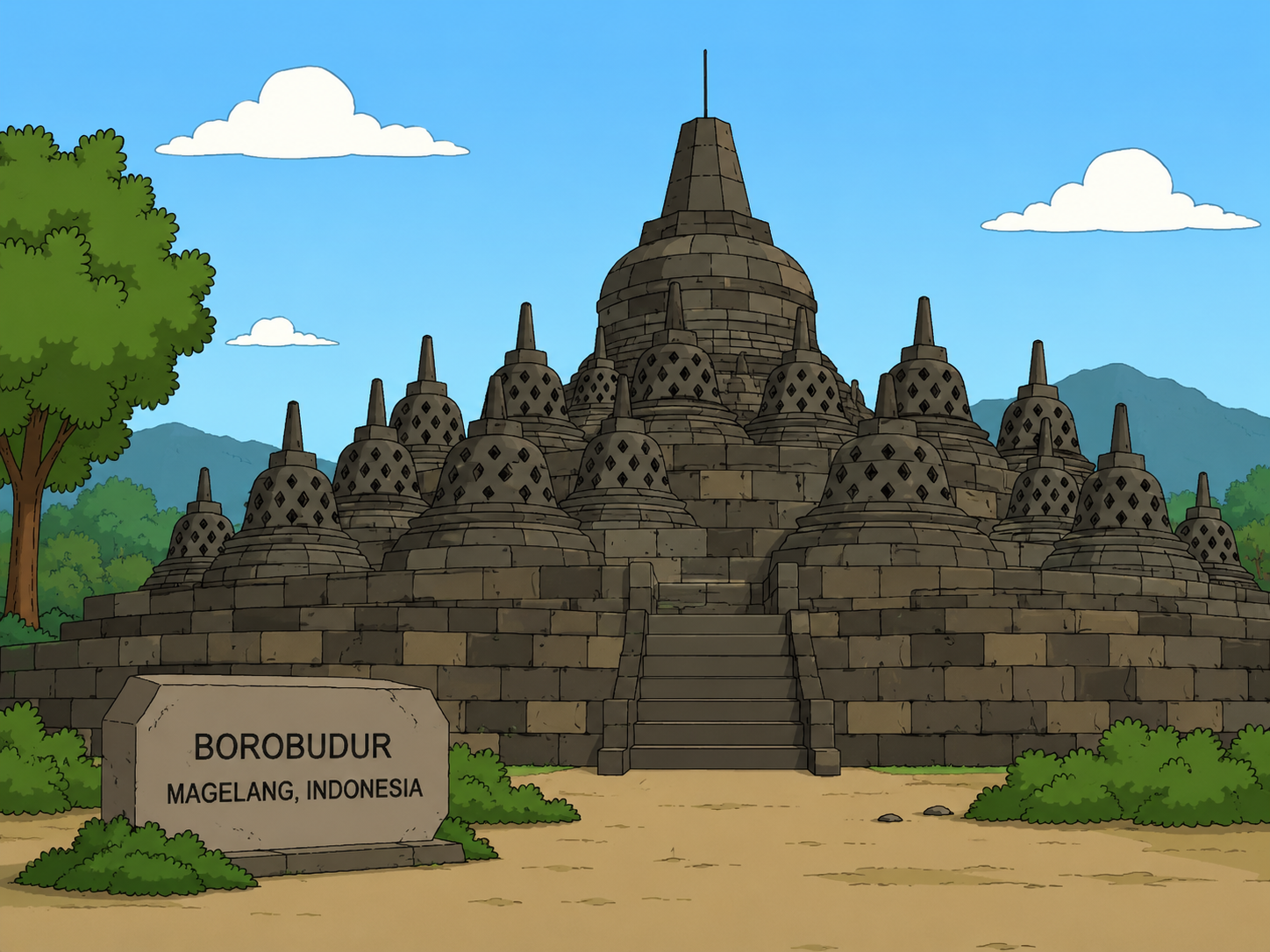
It is fair to say that the government of Indonesia has always perceived Borobudur as an asset, the potential that has not been tapped. The fact that Borobudur was once among the seven wonders of the world and the success of Siem Reap, along with the obsession with having a second Bali, have clouded the government’s judgment about Borobudur. In fact, there is homework before the government decides whether Borobudur is an asset or not.
When we see only that Borobudur is a historical monument, we might assume it will attract tourists, but what kind of tourists? There are several types of tourists, and not everybody will enjoy Borobudur equally. Some of them come to fulfil their curiosity. This type of tourist would not mind staying around the Borobudur complex for a long time for one simple reason: they do not feel there is anything to do in Borobudur other than visiting the temple. Secondly, there is another type of tourist who would love to visit for a longer period for spiritual reasons. Nonetheless, this type of tourist faces difficulties since there is no place designed for spiritual tourism.
Borobudur is an asset, but no one cares about the Purpose
Critiques have been circulating about the government of Indonesia’s unclear vision for Borobudur, including its abandonment of Borobudur’s original purpose. Borobudur is a spiritual centre for Buddhist. Yet, there is almost no discussion about returning Borobudur to its original purpose. Some people thought that Indonesian Buddhists have shown their patience since the government has not publicly stated its intention to give a spiritual space towards Buddhists. However, there is a concern that the government would take this situation as permission to ignore the fact that Borobudur is a spiritual place in the first place.
The idea of making Borobudur the second Bali also triggered debates, since many experts believe that the success of Bali, if we want to put it out loud, is not because of its monumental buildings or valuable tourist attractions. People who come to Bali are bought by the atmosphere of Bali, the entire entity of Bali. The problem is that Bali’s success is about a combination: the people, the nature, and the x-factors.
Pushing Borobudur to be like Bali means the government has to change everything about Borobudur. The Balinese and locals in Borobudur differ in demographics and customs, so pushing them to be more similar would be a controversial move. Indonesia, though a vast archipelago, has not been immune to cultural and social conflicts due to a failure to recognise differences among people. Even people on the same island have different customs and cultures, yet in the policymaking process, this fact has been consistently ignored.
As we believe Borobudur is an asset, we should start to think smaller
The key is probably not in thinking big about Borobudur, but in going back to the basic question: what is the logical direction for Borobudur? Since 1992, the government of Indonesia, through Law No. 5/1992, has enacted regulations on how Borobudur should be organised. The details of how Borobudur should be managed were later set out in Executive Order No 1/1992. From that point on, the government openly shows an obsession with transforming Borobudur.
Yet, we might count the eggs before they hatch, since there is, in fact, insufficient research before Borobudur is developed. If we want to go with the vision of turning Borobudur into the second Bali, what is the basis of that? Is the demographic similar to Bali? Is the brand of Borobudur, in the view of the world, somehow mimicking the Bali one? Meanwhile, when we start to realise that Borobudur’s core is a spiritual place, will the government be ready to abandon the whole plan to turn Borobudur into a second Bali? Will it be ready to engage with the stakeholders of Borobudur to return Borobudur to its intended purpose? Time will tell. Yet, to think Borobudur is an asset without trying to understand Borobudur is not an ideal plan for the government.